IMPLANT DENTISTRY · WARSAW
Dental bone grafting
for implants
When the available bone does not support the planned implant position, augmentation may be considered as part of the restorative plan.
We first assess whether grafting is needed, what extent is proportionate and whether it may be combined with implant placement.
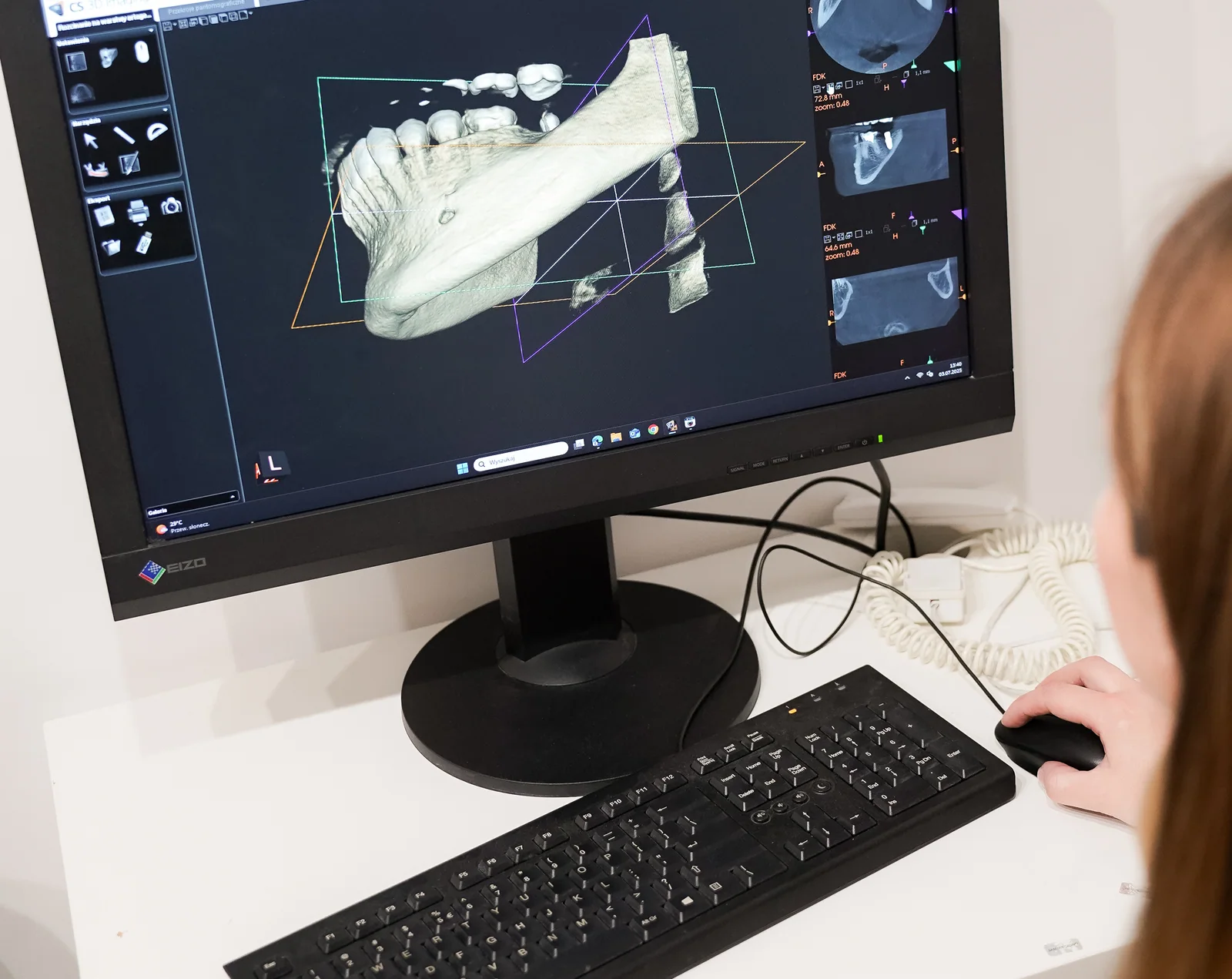
01Diagnostics firstThe need for grafting cannot be judged from the appearance of the gum alone.
02Different proceduresThe technique depends on the site, defect and planned implant.
03Healing is part of the planThe timeline is coordinated with the complete implant treatment.
01 / CONSULTATION
When might bone grafting be considered?
The goal is not grafting for its own sake, but creating appropriate conditions for the planned tooth restoration.
- 01
Bone loss after a missing tooth
The ridge can change over time and needs assessment before implant placement.
- 02
A narrow ridge
Bone width and shape affect the possible implant position.
- 03
The back of the upper jaw
Available bone and the maxillary sinus are considered in this region.
- 04
Reassessment after previous treatment
A previously treated site may need a new clinical and radiographic review.
02 / STAGES
How augmentation is planned
Bone preparation may be limited or multi-stage. Not every implant site needs a separate grafting procedure.
- 01
Start with the future tooth
The intended restoration and implant position define the purpose of any graft.
- 02
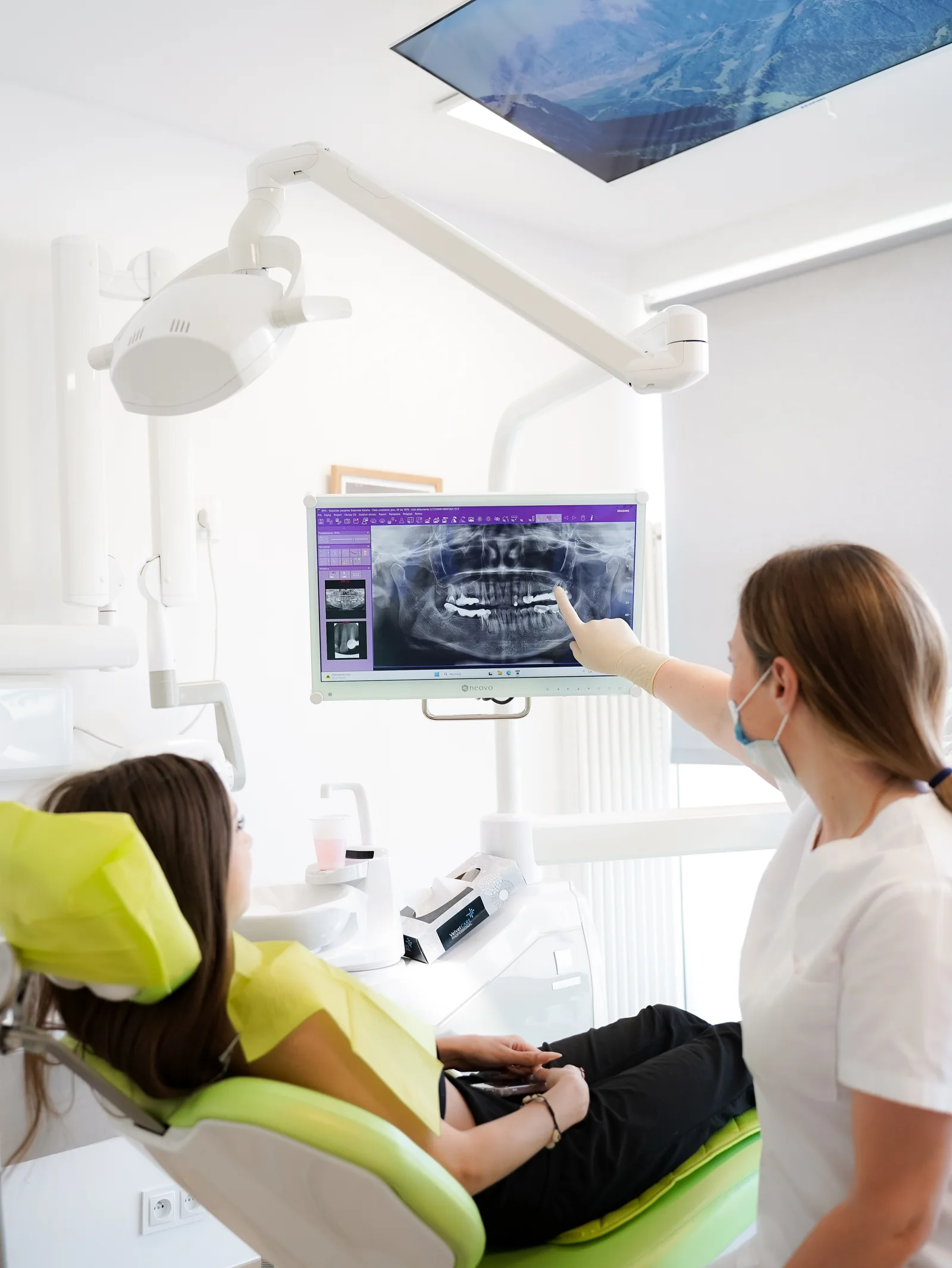
Examination and imaging
Bone, soft tissues and nearby structures are assessed to the extent required.
- 03
Choose the sequence
Grafting may precede implant placement or, when appropriate, be performed at the same stage.
- 04
Procedure and aftercare
The approach, material, anaesthesia and postoperative instructions are discussed.
- 05
Healing and reassessment
Review of healing guides the timing of the next treatment stage.

03 / INDIVIDUAL PLAN
What influences the technique?
There is no single bone-grafting method suitable for every implant site.
Location and shape of the defect
The amount and configuration of missing bone affect the options.
Planned implant position
The restoration-led implant plan defines the target for augmentation.
Soft tissues
Gum condition and wound closure are part of the assessment.
Health and healing
Medical conditions, medicines, smoking and hygiene can affect decisions and timing.
04 / BEFORE YOU DECIDE
What do we discuss before treatment?
- the objective of implant treatment;
- available imaging and treatment records;
- the proposed grafting material and approach;
- alternatives and the likely number of stages;
- healing, review visits and the estimated cost.
Important: this page provides general information and does not replace an examination or individual consultation. Suitability and the final plan are established after clinical assessment.
05 / PATIENT QUESTIONS
Common questions before a consultation
Questions about your symptoms or imaging are best discussed during an individual appointment.
Is a bone graft always needed before an implant?
No. The need and extent are assessed individually.
Can grafting and implant placement be done together?
Sometimes, but only when the conditions support an appropriate and stable plan.
How long does a dental bone graft take to heal?
Timing varies with the site, extent, material and individual healing.
What material is used?
Different sources and materials are available. The choice, origin, benefits and limitations should be discussed for your case.
Are follow-up appointments needed?
Yes. Their timing depends on the procedure and healing.
MEDICAL SOURCES
Patient information used for review
this page provides general information and does not replace an examination or individual consultation. Suitability and the final plan are established after clinical assessment.
FIRST STEP
Let’s start with your situation.
Choose a practice, check available appointments and book a consultation.