ORAL SURGERY · WARSAW
Periodontal surgery
in Warsaw
Surgery around the gums and supporting tissues is considered only after diagnosis and a clear treatment objective.
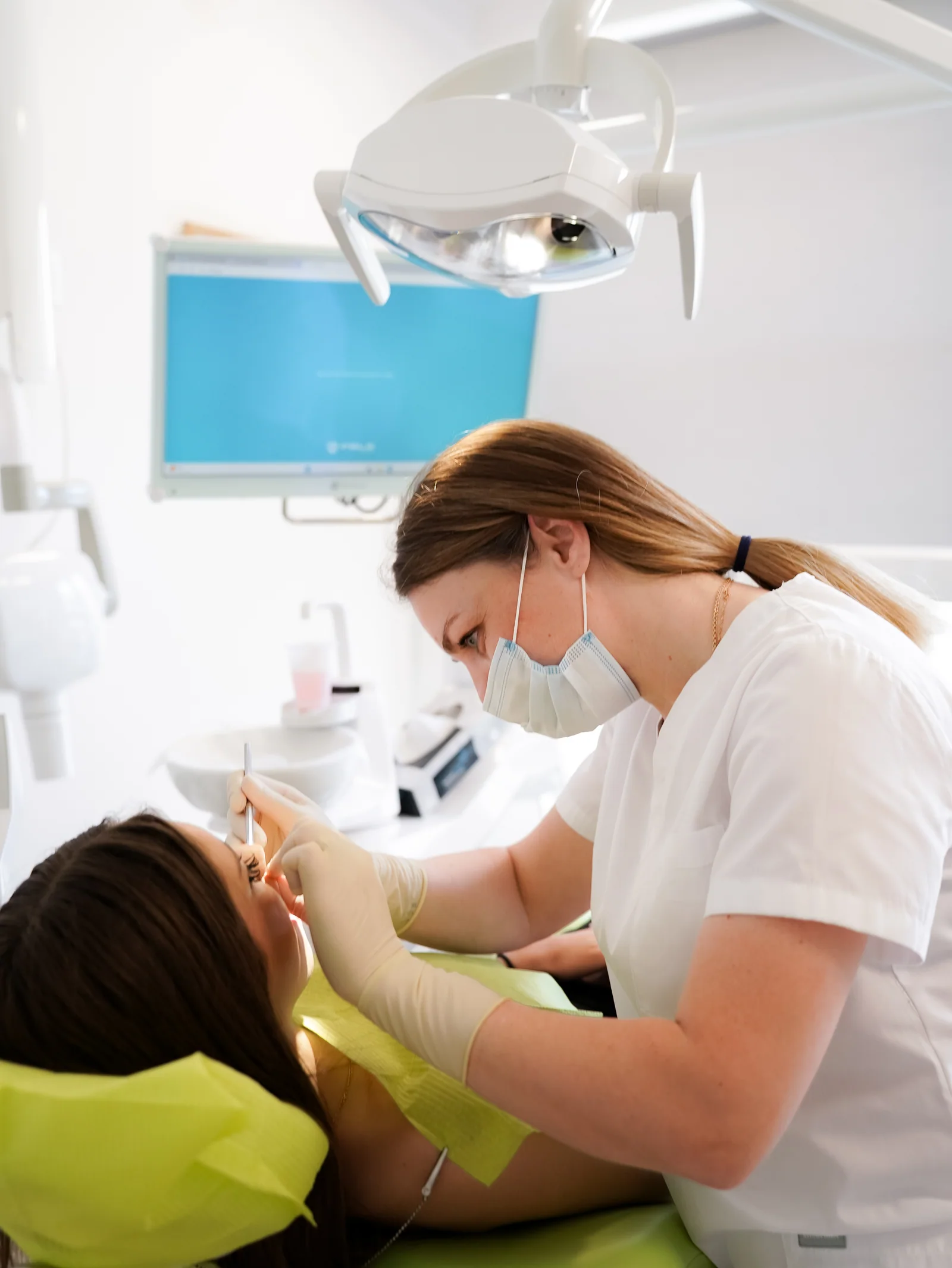
The examination identifies the problem, the condition of the gums and bone, and whether non-surgical care should come first.
01Diagnosis defines the aimDifferent periodontal problems require different approaches.
02Often part of a sequenceHygiene and non-surgical therapy may precede surgery.
03Maintenance mattersLong-term review and daily plaque control remain important after treatment.
01 / CONSULTATION
When might periodontal surgery be discussed?
The procedure should address a diagnosed problem and have a defined role in the wider treatment plan.
- 01
Persistent deep periodontal pockets
Surgical access may be considered after the response to initial therapy is reviewed.
- 02
A gum or bone defect
The type and extent of tissue loss determine which options are realistic.
- 03
Preparation for restoration
Crown lengthening or tissue correction may be considered before restorative care.
- 04
A need to improve access or tissue shape
The objective and effect on cleaning and appearance are discussed first.
02 / STAGES
How periodontal treatment is planned
Surgery is not automatically the first step. The sequence depends on diagnosis and response to initial care.
- 01
Periodontal examination
We assess gums, pocket depths, inflammation, teeth and supporting tissues.
- 02
Initial treatment and hygiene
Plaque control and non-surgical therapy may be needed before reassessment.
- 03
Define the surgical objective
Access, recontouring, regeneration or preparation for restoration are considered according to the problem.
- 04
Procedure and instructions
Anaesthesia, wound care and individual restrictions are explained.
- 05
Healing and maintenance
Review and ongoing periodontal maintenance support the result.
03 / INDIVIDUAL PLAN
What affects the choice of procedure?
The same symptom can arise from different periodontal conditions.
Diagnosis and defect shape
The pattern of tissue and bone loss influences possible treatment.
Inflammation control
Active disease and daily plaque control affect timing and prognosis.
Tooth and bite factors
Mobility, restoration design and forces may matter.
Health and habits
Smoking, diabetes, medicines and healing are relevant to planning.
04 / BEFORE YOU DECIDE
What do we discuss before treatment?
- the periodontal diagnosis and purpose of surgery;
- previous non-surgical treatment and response;
- medical conditions, medicines and smoking;
- expected benefits, limitations and alternatives;
- aftercare and the maintenance schedule.
Important: this page provides general information and does not replace an examination or individual consultation. Suitability and the final plan are established after clinical assessment.
05 / PATIENT QUESTIONS
Common questions before a consultation
Questions about your symptoms or imaging are best discussed during an individual appointment.
Is gum surgery always needed for periodontal disease?
No. Many cases begin with hygiene improvement and non-surgical treatment; surgery is considered for specific remaining problems.
What types of periodontal surgery are there?
Procedures can improve access for cleaning, reshape tissues, support regeneration or prepare a tooth for restoration. The choice depends on diagnosis.
Will gums grow back?
Healing and tissue changes depend on the procedure and starting condition. A guaranteed amount of regeneration cannot be promised.
How long is recovery?
It varies with the procedure and individual healing. Personal instructions are provided after planning.
Why is maintenance still needed?
Periodontal disease can progress again, so daily hygiene and professional review remain important.
MEDICAL SOURCES
Patient information used for review
this page provides general information and does not replace an examination or individual consultation. Suitability and the final plan are established after clinical assessment.
FIRST STEP
Let’s start with your situation.
Choose a practice, check available appointments and book a consultation.